What is a peptide certificate of analysis?
A certificate of analysis states what was measured and what the measurement returned. Everything else — that a product is safe, effective, sterile, or equivalent to a pharmaceutical grade — is outside the document unless a test in the document addresses it.
Evidence level: analytical and documentary. This page explains how to read laboratory records; it makes no claim about biological effect.
Who issued the report?
The identity of the laboratory is the first thing to establish, because a result is only as independent as the party that produced it.
- Is the laboratory independent of the seller, or an internal quality function?
- Is the laboratory named clearly, with a means of confirming the report at source?
- Does the report carry an identifier the laboratory itself can look up?
A report that cannot be traced back to the issuing laboratory should be treated as a claim about a report, not as a report.
What sample was tested?
A COA describes one sample. The link between that sample and the material in front of you is the part most often left vague.
- Sample identifier — the reference the laboratory assigned to the submitted material.
- Product identifier — what the sample was described as when submitted.
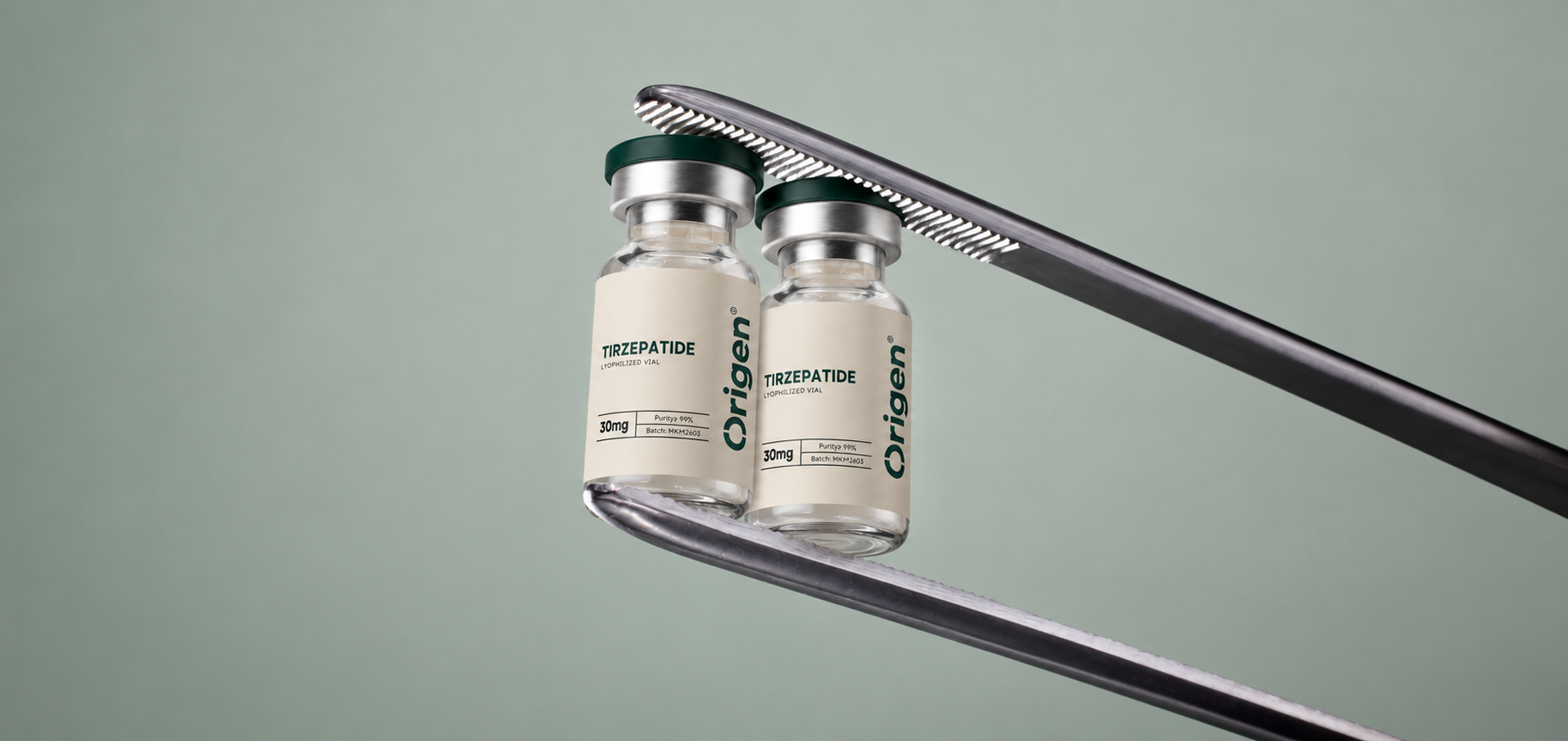
- Batch or lot relationship — whether the report is tied to a stated lot, and whether that lot marking appears on the vial.
- Submitted sample — in third-party testing, the laboratory usually analyses what it was sent, and does not certify how the sample was collected.
Testing one sample does not establish that every vial in a batch, or every future batch, is identical. A report describes the analysed sample. Any broader inference is an inference, and should be labelled as one.
What analytical method was used?
The method determines what the numbers mean. Two figures with the same units can answer different questions if they were produced by different methods.
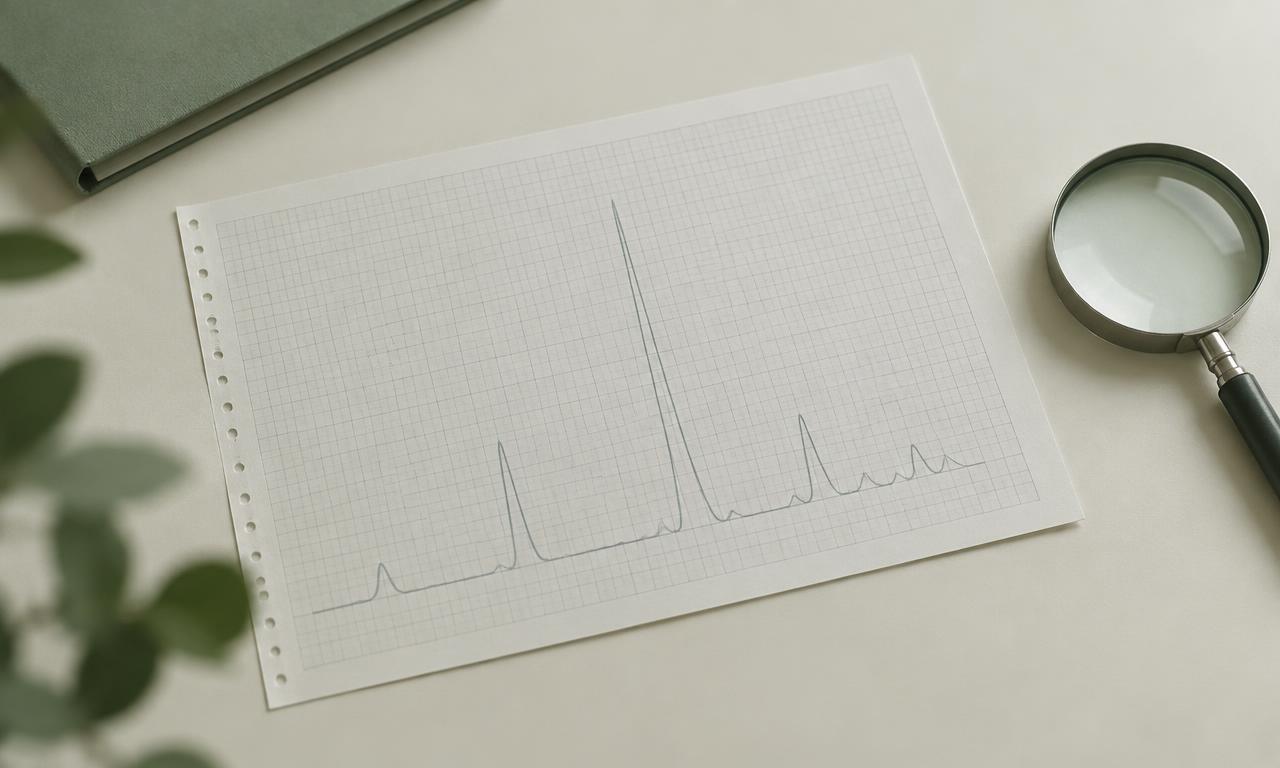
- HPLC — separates components and is commonly used for purity, and for quantity where calibrated against a standard.
- Mass spectrometry — measures molecular mass and is commonly used to support identity.
- Bacterial endotoxin testing — a specific microbiological method, separate from sterility testing.
- Elemental analysis — used for heavy metals and elemental impurities.
Analytical procedures are validated differently depending on whether they are intended for identification, impurity testing or assay, so 'tested by HPLC' is an incomplete description without knowing which purpose the method served. [1]
How should you read a purity result?
As a proportion of detected material, under the stated method, for the submitted sample — and not as a statement about how much peptide the vial contains.
The distinction is set out in full in peptide purity vs peptide content.
How should you read identity or molecular-mass results?
An identity result by mass spectrometry supports the statement that the measured mass is consistent with the expected mass of the named peptide. That is a meaningful confirmation, and it is also a bounded one: consistency with an expected mass does not exclude every possible isomeric or closely related species, and it says nothing about quantity.
Where a report combines an identity test with a purity result and a quantity result, the three together answer more than any one of them alone — which is what a specification framework is designed to achieve. [2]
What do report numbers and verification keys mean?
Many laboratories assign each analysis a report or task number, and some issue an additional key that allows a third party to retrieve the original report from the laboratory's own system. The combination exists because a PDF or an image can be edited, while a record held by the issuing laboratory cannot be edited by the seller.
Origen publishes both elements in plain text for each report — the task number and the unique verification key — alongside a direct link to the laboratory-hosted document. The Retatrutide 30 mg analysis, for example, is published as task 171909 with a reported content of 29.82 mg, purity of 99.761% by HPLC, and a bacterial endotoxin result. [6]
The full set is listed on the certifications page.
What does a COA not tell you?
This section matters more than any other on the page.
- A purity result does not establish sterility. Sterility is a separate test, and a report that did not test it cannot speak to it.
- A purity result does not establish endotoxin status unless an endotoxin test was performed.
- One tested sample does not characterise every vial, or any future batch.
- A report does not support claims outside the tests it contains — including any claim about biological effect, safety, or suitability for human use.
- A screenshot or PDF is not proof of authenticity. Only retrieval from the issuing laboratory establishes that the report exists as shown.
- A COA is not a regulatory approval and does not imply one.
How can a COA be independently verified?
By retrieving it from the laboratory rather than from the seller. Where the laboratory operates a public verification route, the report identifier and key can be entered there, and the laboratory's own system returns the document for comparison against the copy you were shown. [5]
The step-by-step process for the laboratory Origen uses is set out in how to verify a Janoshik laboratory report.
How Origen publishes testing documentation
Each product page links to the analysis published for that product. The task number, verification key, reported content, purity and test date are published as plain indexable text rather than only inside an image, so they can be checked before purchase and by anyone who has not purchased at all. [6][7][8][9]
The library of published reports is at certifications.
The verification process and its stated scope are described on trust and verification.
COA reading checklist
| Field | What to check | Why it matters |
|---|---|---|
| Laboratory | Named, independent, contactable | Determines whose measurement it is |
| Report or task number | Present and retrievable at the laboratory | Allows independent retrieval |
| Sample identity | What was submitted and how it is described | Links the document to the material |
| Lot or batch | Stated, and matching the vial marking | Establishes scope of the result |
| Tests performed | Listed explicitly | Defines what the document can answer |
| Method | Named per test | Determines how each figure should be read |
| Purity result | Figure and method | A proportion, not an amount |
| Content or quantity | Figure in mass units | An amount, not a proportion |
| Date | Analysis date | Results describe the sample at that time |
Frequently Asked Questions
Does a certificate of analysis prove a product is safe?
No. A COA records the results of the tests performed on a submitted sample. Safety, efficacy and suitability for use are outside its scope.
Does a COA cover every vial in a batch?
No. It describes the sample that was analysed. Extending the result to every vial or every future batch is an inference, not a documented finding.
Is a PDF of a report enough?
Not on its own. Documents can be edited or separated from context. Retrieval from the issuing laboratory is what establishes that the report exists as presented.