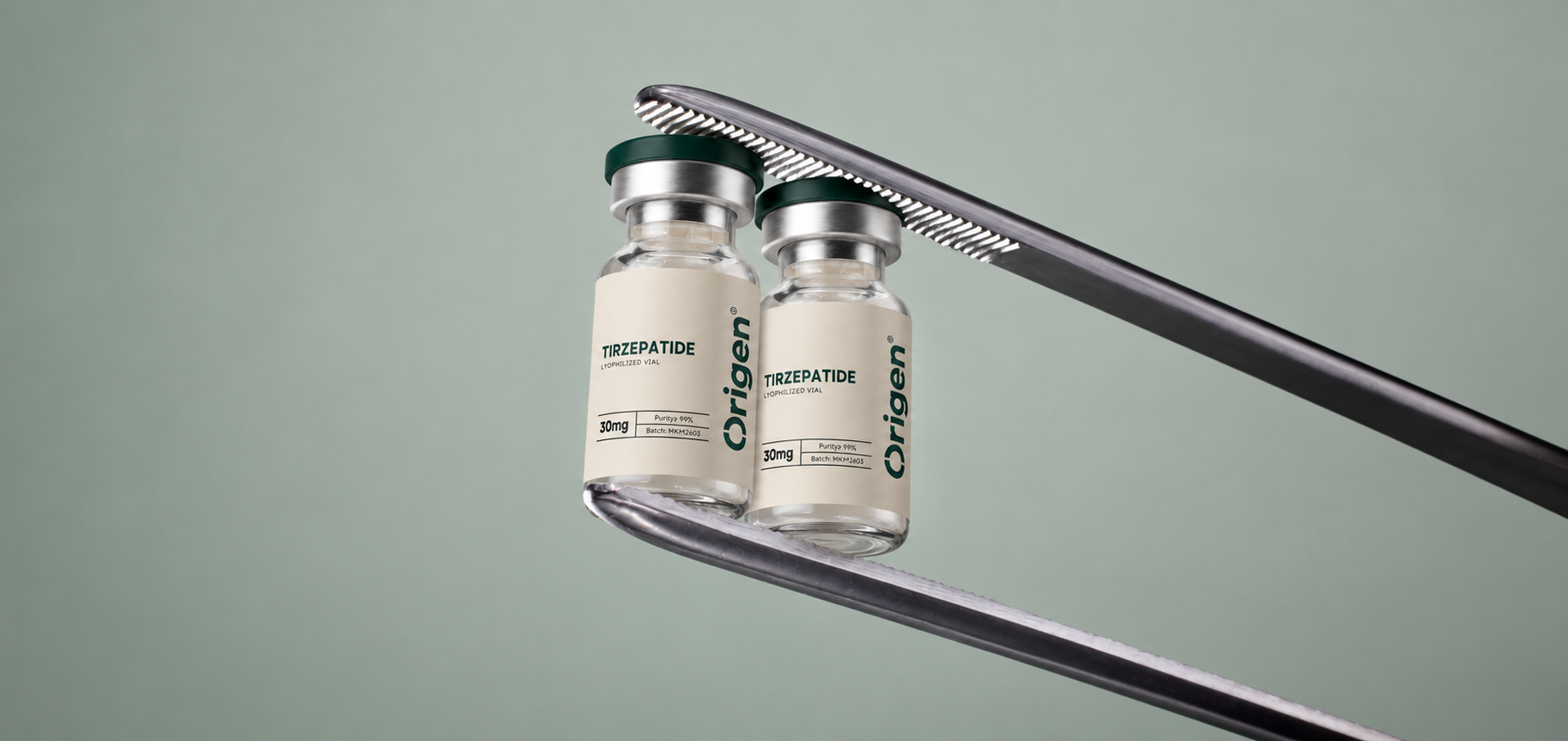
How do the two compounds differ?
Comparisons between two medicines are only as good as the trial that produced them. Indirect comparison, taking a result from one trial and setting it beside a result from a different trial, is unreliable because the two trials enrolled different people, at different sites, under different protocols. A head-to-head randomised trial removes that problem by assigning the same population, at the same time, to one drug or the other. Only two such trials exist for this pair, and both are described below.
| Tirzepatide | Semaglutide | |
|---|---|---|
| Receptor targets | GIP and GLP-1 | GLP-1 |
| Head-to-head trial in diabetes | SURPASS-2, 1,879 participants, 40 weeks | Same trial, comparator arm at 1 mg |
| Head-to-head trial in obesity | SURMOUNT-5, 751 participants, 72 weeks | Same trial, comparator arm at 1.7 or 2.4 mg |
| Published cardiovascular outcomes | SURPASS-CVOT vs dulaglutide, non-inferior, HR 0.92 | SELECT vs placebo, 17,604 participants, MACE 6.5% vs 8.0%, HR 0.80 |
What did the obesity head-to-head trial find?
HUMAN — PHASE 3B, OPEN-LABEL, ACTIVE COMPARATOR
| Study design | Detail |
|---|---|
| Participants | 751 adults with obesity and without diabetes |
| Duration | 72 weeks |
| Arms | Tirzepatide at maximum tolerated dose of 10 or 15 mg versus semaglutide at maximum tolerated dose of 1.7 or 2.4 mg |
| Primary endpoint | Percent change in body weight from baseline |
| Endpoint | Result |
| Tirzepatide | −20.2% (95% CI −21.4 to −19.1) |
| Semaglutide | −13.7% (95% CI −14.9 to −12.6) |
| Statistical result | P<0.001 for the difference |
The confidence intervals here are worth pausing on, because they do more work than the headline percentages. A confidence interval is the range within which the true average effect is likely to lie, given the data and the sample size. The two intervals in SURMOUNT-5, roughly −21.4 to −19.1 and −14.9 to −12.6, do not overlap at all. That separation is why the difference between the two arms is reported as statistically clear rather than as a close call. [3]
Both arms were titrated to the maximum tolerated dose rather than to a fixed dose, which reflects how these drugs are actually used but also means the comparison is between two treatment strategies rather than between two fixed quantities. The trial was open-label; the two products are delivered by different devices on different schedules, which makes blinding impractical, but it remains a design limitation.
What did the diabetes head-to-head trial find?
HUMAN — PHASE 3, OPEN-LABEL, ACTIVE COMPARATOR
SURPASS-2 randomised 1,879 adults with type 2 diabetes already taking metformin to one of three tirzepatide doses or to semaglutide 1 mg once weekly, over 40 weeks. HbA1c fell by 2.01, 2.24 and 2.30 percentage points on tirzepatide 5, 10 and 15 mg respectively, compared with 1.86 percentage points on semaglutide. Weight reduction was greater on tirzepatide by 1.9, 3.6 and 5.5 kg across the three doses. [1]
One caveat applies specifically to this trial. The semaglutide comparator was 1 mg weekly, which was the highest dose approved for type 2 diabetes at the time the trial was designed. Higher semaglutide doses were subsequently studied, so SURPASS-2 answers the question of how tirzepatide compared with semaglutide at 1 mg, not how it compares with every semaglutide dose in current use.
How do the cardiovascular data compare?
HUMAN — CARDIOVASCULAR OUTCOMES TRIALS
This is where a simple ranking breaks down. The SELECT trial randomised 17,604 participants with obesity and established cardiovascular disease but without diabetes to semaglutide or placebo, and reported major adverse cardiovascular events in 6.5% of the semaglutide group against 8.0% on placebo, a hazard ratio of 0.80. That is a placebo-controlled demonstration of reduced cardiovascular events in that population. [5]
Tirzepatide's outcomes trial, SURPASS-CVOT, used a different design: it compared tirzepatide against dulaglutide, an active drug with its own established benefit, in 13,165 participants with type 2 diabetes and atherosclerotic cardiovascular disease. It met non-inferiority with a hazard ratio of 0.92 but did not demonstrate superiority. [4]
Those two trials cannot be ranked against each other. They enrolled different populations, used different comparators and were designed to answer different questions. The accurate summary is that semaglutide has placebo-controlled evidence of cardiovascular event reduction in one population, and tirzepatide has active-comparator evidence of non-inferiority in another.
Greater weight or HbA1c reduction in a trial does not automatically translate into a greater reduction in long-term cardiovascular events. Those are separate endpoints requiring separate trials.
What should qualify this comparison?
- Both head-to-head trials were open-label, so neither participants nor investigators were blinded to treatment allocation.
- Both head-to-head trials were sponsored by the manufacturer of tirzepatide, which is standard practice but relevant context.
- SURPASS-2 used semaglutide 1 mg, not the higher doses later available.
- Neither head-to-head trial was designed or powered to compare cardiovascular outcomes between the two compounds.
- Adverse event profiles overlapped substantially, with gastrointestinal events the most common in both arms of both trials.
For the full tirzepatide trial programme, see Tirzepatide clinical trials.
For the three-receptor comparison, see Tirzepatide vs retatrutide.
For all three compounds side by side, see retatrutide vs tirzepatide vs semaglutide.
Frequently Asked Questions
Is tirzepatide more effective than semaglutide for weight reduction?
In SURMOUNT-5, the only randomised head-to-head obesity trial, tirzepatide produced a mean weight change of −20.2% against −13.7% for semaglutide over 72 weeks, with non-overlapping confidence intervals and P<0.001. That is a single open-label trial of 751 participants and applies to the doses and population studied.
Have the two compounds been compared for cardiovascular outcomes?
No. No trial has compared tirzepatide and semaglutide head-to-head for cardiovascular events. SELECT compared semaglutide with placebo and SURPASS-CVOT compared tirzepatide with dulaglutide, so the two evidence bases are not directly comparable.
Why were the head-to-head trials open-label?
The two products use different injection devices and different titration schedules, which makes blinding impractical. The laboratory-measured endpoints used in both trials are less vulnerable to expectation bias than subjective outcomes would be, but the lack of blinding remains a limitation.
What dose of semaglutide was used in the comparisons?
SURPASS-2 used semaglutide 1 mg once weekly. SURMOUNT-5 used a maximum tolerated dose of 1.7 mg or 2.4 mg once weekly.